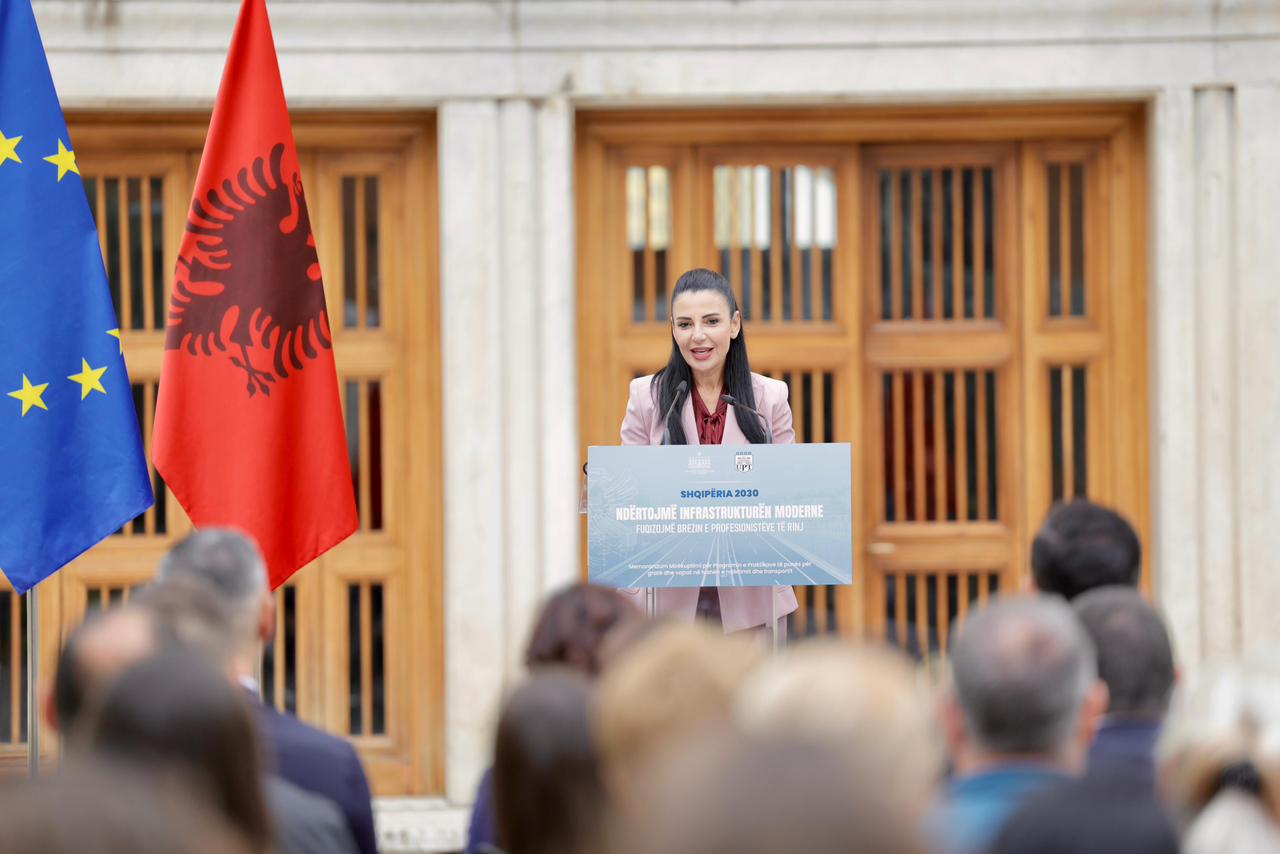
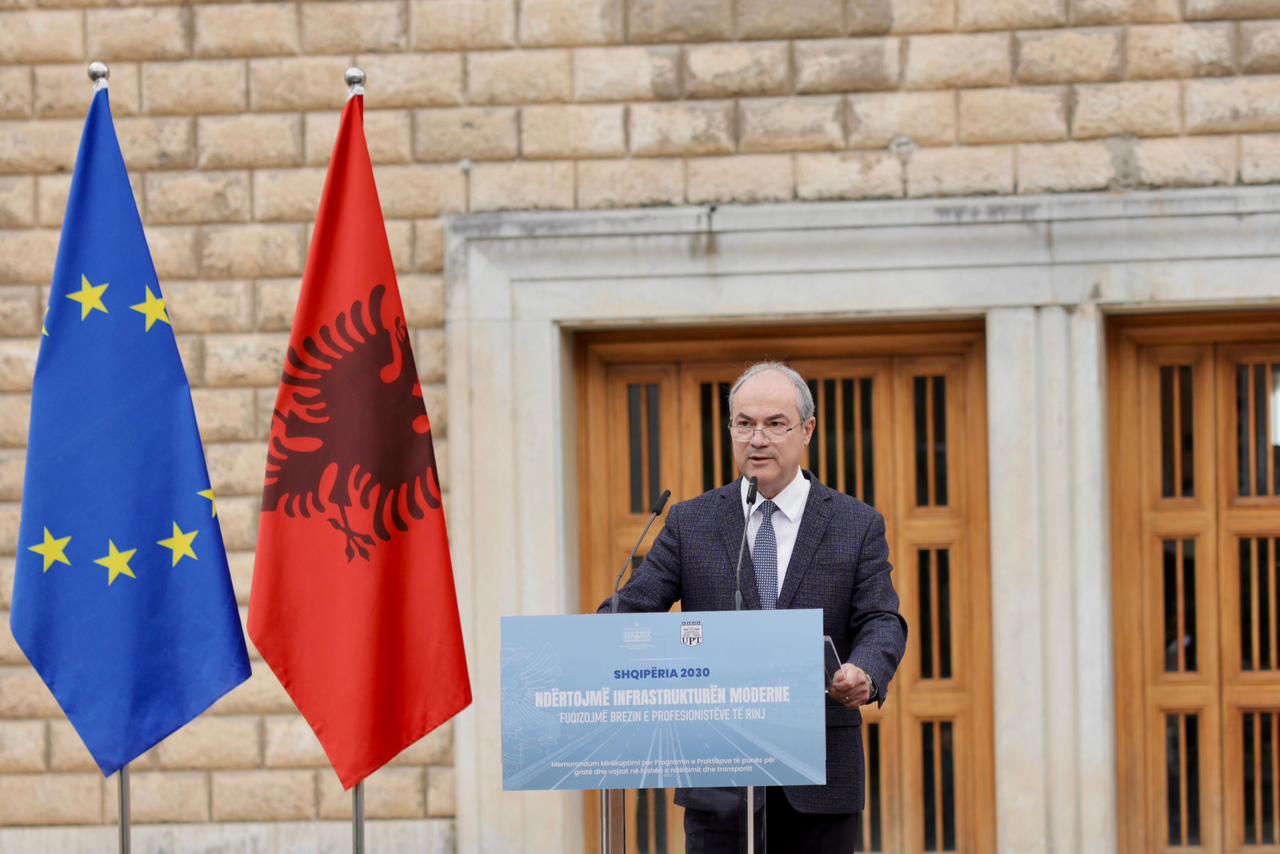
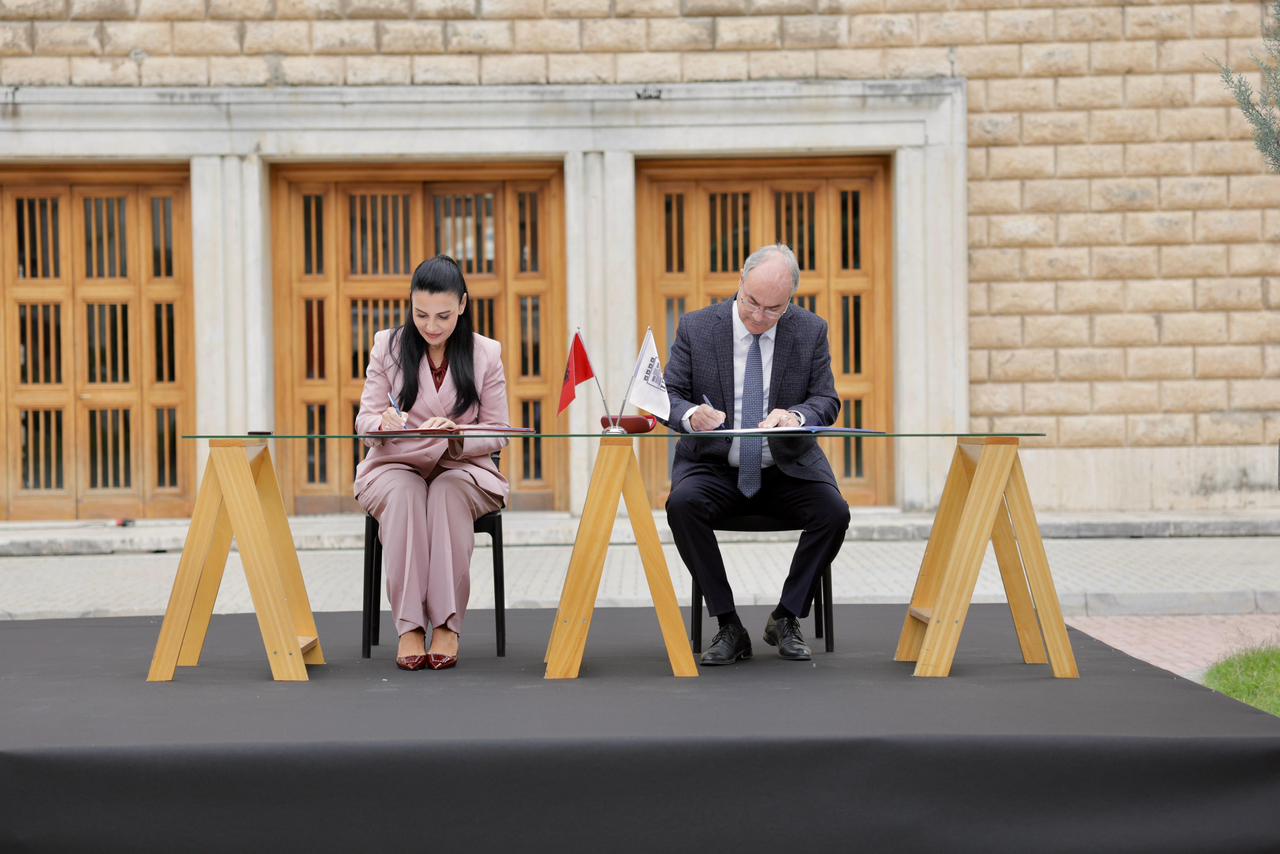
The Polytechnic University of Tirana and the Ministry of Infrastructure and Energy have signed an agreement to launch a program supporting the professional training of students. This initiative will enable paid internships for students at the university, offering them the opportunity to participate in concrete projects, gain direct insight into infrastructure development processes, and acquire the skills necessary for the labor market.
The program is designed to enhance career prospects for students and strengthen the link between education and labor market needs, with a particular emphasis on increasing the participation of women in engineering fields.
In his remarks, the Prime Minister emphasized the importance of cooperation between the government and universities to provide students with tangible opportunities, ensuring their integration into the labor market from the early stages of their studies.
***
Prime Minister Edi Rama: Greetings to all!
Thank you very much for your presence at this event, which marks an important moment in advancing the cooperation between the government and the university. I would like to highlight the fact that, ever since we launched the Pact for the University, the process of interaction with the academic world across different fields has seen continuous progress. Experience has shown us that within these collaborations with various faculties there is always much to learn, but at the same time, there is always more to be done.
Today’s program reflects precisely this reality. Beyond enabling a unique internship opportunity for several students from this university, our goal is to go even further. We aim to design and implement more specialized programs of this kind, so that all students have the chance to begin shaping their future even before completing their studies, by engaging in work experiences that open new perspectives and provide them with the essential knowledge needed to become permanent contributors to the various institutions operating in service of the Albanian state.
On the other hand, these initiatives are meant to create new bridges and channels of cooperation, ensuring that government investments and direct support to the university are aligned with mutual benefit. Mutual benefit, in which the university receives tangible improvements in students’ lives, and what the state invests translates into the positive impact that these students bring to the quality and performance of the relevant state structures.
Work internships have now become routine, and every year we have a considerable number of students who are able to take advantage of these opportunities to carry out precisely this transition, from the lecture halls of the university to the frontlines of the labor market in daily life. At the same time, as the Rector mentioned, internationalization is a process that has already begun to yield its first results, but it requires joint efforts by the government and the leadership of universities to push further, so that much of the time that has been lost can be regained.
We are making significant efforts to bring new academic realities from abroad into Albania, while also supporting all initiative universities undertake to open themselves to the world, to ensure that students here in Albania can access, directly and in real time, the same academic opportunities that the global university network offers.
I am also very pleased that the Pact for the University is functioning in the direction of improving infrastructure. In fact, this university is being strengthened with two new modern facilities, which will guarantee space and optimal conditions for students of engineering to geology. Naturally, we will not stop here. Beyond this new and essential infrastructure, it is equally necessary to support the university by equipping it with the required laboratories and the latest technology, so that the epochal transformation taking place worldwide will also deeply and fully embrace our universities.
Allow me to conclude with this point on change and on the necessity for every university to create, as soon as possible, the spaces that enable professors and students alike to channel their talents, knowledge, and intellectual curiosity into the field of artificial intelligence. This is indispensable, but at the same time, entirely possible. Above all, what makes artificial intelligence so exhilarating is that it matters little where you are located on the globe, or where your country stands in international rankings—because through artificial intelligence, epochal leaps can be achieved that would otherwise be completely impossible, regardless of talent, ambition, or determination.
With this in mind, we will ensure that next year’s budget, as well as future budgets, includes a dedicated component to support all the initiatives and challenges that are worth backing in this direction. For this reason, I take this opportunity to call upon professors and students to engage as much as possible, working together to expand the role of artificial intelligence across all university settings.
I am particularly pleased that this program also aims to increase the participation of young women in fields where, in fact, gender inequality is not a critical problem, but the program itself is designed with this focus in mind. We need as many motivated individuals as possible, those who are not content with comfort but are in constant pursuit of challenges and in a continuous struggle with themselves. And in this respect, as a representative of the so-called “weaker gender,” I must say—much to the regret of my fellow men—that women are ahead of us. There is nothing left for us to do except, with dignity, accept this reality and strive to recover as much ground as we can, fully aware that we may never surpass them, but at the very least we can aspire to stand as worthy companions by their side, with as much dignity as possible.
Thank you very much!